Key Takeaways
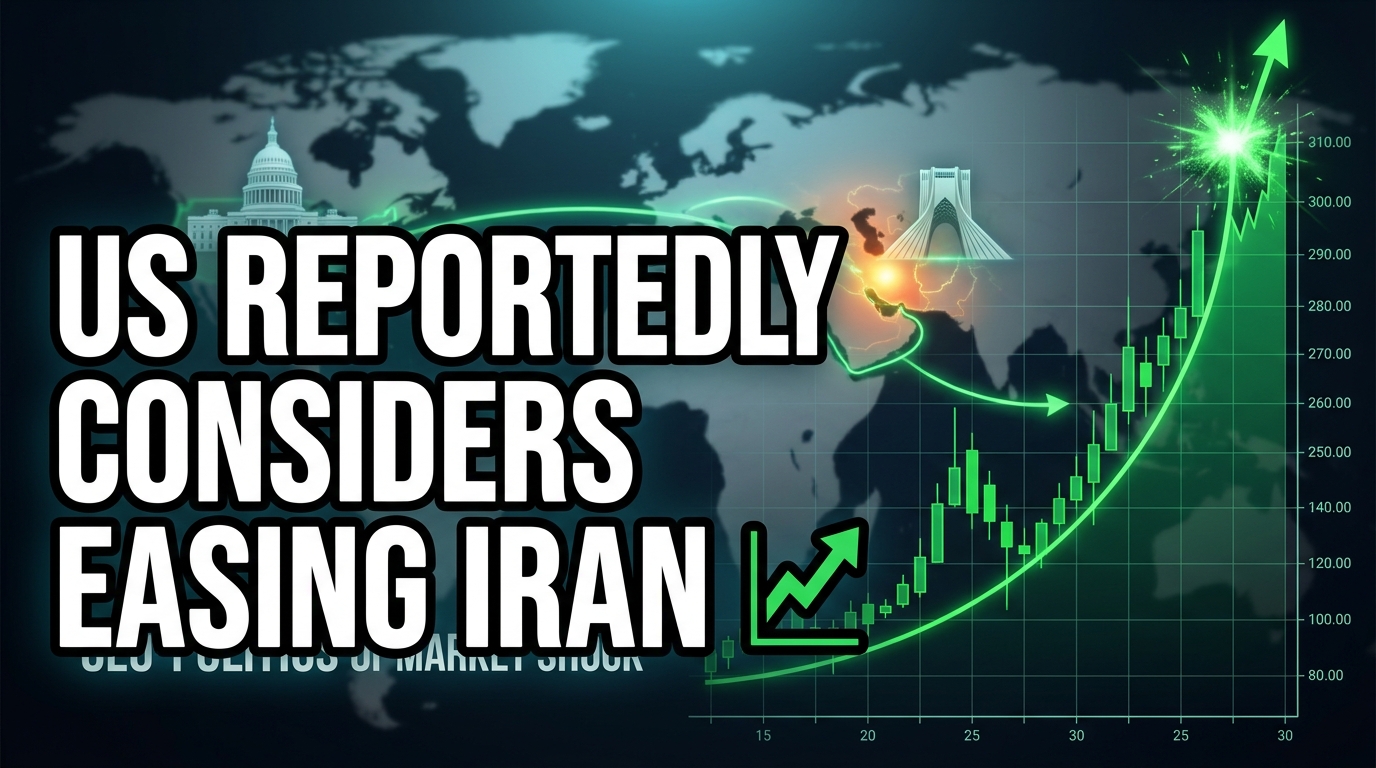
- The Biden administration is reportedly considering easing sanctions on Iran, potentially allowing up to 500,000 barrels per day (bpd) of additional crude oil into global markets within six months.
- Brent crude futures ($LCOV3) declined 1.5% to $82.50 per barrel following reports of potential sanctions relief, reflecting expectations of increased supply.
- Investors should monitor diplomatic progress for its potential to cap oil prices, which could alleviate inflationary pressures and support broader economic growth forecasts.
US Weighs Sanctions Relief Amid Diplomatic Push
The Biden administration is reportedly exploring pathways to ease sanctions on Iran, potentially allowing for increased oil exports in exchange for de-escalation of its nuclear program and regional stability, according to sources familiar with the discussions as of late July. These considerations are part of broader, Oman-mediated diplomatic efforts aimed at reducing tensions in the Middle East and reviving aspects of the 2015 nuclear deal.
Crude oil futures responded immediately to the reports, with Brent crude ($LCOV3) declining 1.5% to $82.50 a barrel and West Texas Intermediate ($CLV3) falling 1.8% to $78.80 a barrel during Tuesday's trading session. The price movements reflected market expectations of a potential increase in global oil supply, even as official confirmation remains pending. Trading volumes for crude oil futures saw a 12% increase above their 30-day average, signaling heightened investor activity.
Market Impact
The prospect of additional Iranian oil supply arriving on global markets has introduced a significant bearish factor into the oil complex. Analysts estimate that Iran could quickly bring an additional 500,000 to 1 million bpd to market if sanctions are substantially eased, a volume that would represent a notable shift in the supply-demand balance. This potential influx contrasts sharply with recent tightening, which saw Brent crude climb over 15% in July to a three-month high of $87.55 per barrel.
The immediate drop in oil prices reverberated across related sectors. Energy stocks, as measured by the S&P 500 Energy Sector Index ($XLE), fell 0.8% on the day, underperforming the broader market. Conversely, sectors sensitive to fuel costs, such as airlines ($JETS) and transportation, saw modest gains, with the Dow Jones Transportation Average rising 0.3%. A sustained reduction in oil prices could translate into lower input costs, improving profit margins for these industries.
Inflation expectations also showed a slight moderation. The 10-year Treasury Inflation-Protected Securities (TIPS) breakeven rate, a market gauge of expected inflation, edged down 2 basis points to 2.38%. This indicates that bond markets are pricing in a slightly lower probability of persistent high inflation, a direct consequence of potentially lower energy prices. The $USD/JPY currency pair also saw minor fluctuations, with the yen strengthening slightly as risk-off sentiment eased due to potential geopolitical stability.
What Analysts Are Saying
Goldman Sachs analysts noted in a client report dated August 1 that any significant return of Iranian oil would likely cap crude prices in the near term. "While current market fundamentals remain tight, a consistent inflow of 500,000 bpd from Iran could push Brent crude back towards the $80 per barrel support level, particularly if OPEC+ does not adjust its production strategy," the report stated. The bank emphasized the importance of monitoring actual export data rather than just diplomatic rhetoric.
According to a research note from JPMorgan Chase & Co. on August 2, the political complexities surrounding Iran’s nuclear program and regional security mean that "any sanctions relief will be gradual and subject to stringent verification mechanisms." Analysts cautioned that the full impact on global supply might not materialize for six to twelve months, factoring in logistical challenges and the pace of diplomatic progress. They highlighted that while the market is reacting to the possibility, the actual flow of barrels could be slower than anticipated.
Eurasia Group's lead Middle East analyst, Hamidreza Azizi, suggested that "the US is likely pursuing a 'de-escalation for de-escalation' approach, rather than a full return to the JCPOA." He added that this calibrated strategy could stabilize regional dynamics, preventing further escalation while providing a moderate, rather than overwhelming, boost to global oil supply. Azizi also noted that domestic political opposition within the US could complicate the swift implementation of any broad sanctions relief.
What to Watch
Investors should closely monitor official statements from Washington and Tehran regarding the ongoing Oman-mediated talks. Any concrete announcements of waivers for Iranian oil exports or progress on nuclear inspections by the International Atomic Energy Agency (IAEA) would be key catalysts. The next IAEA quarterly report on Iran's nuclear activities, expected in late September, will provide crucial insights into Tehran's compliance and the viability of diplomatic solutions.
Key technical levels for Brent crude ($LCOV3) include immediate support at $80 per barrel and a stronger psychological floor at $75. Resistance levels are seen at $85 and $88 per barrel, which would need to be breached for prices to resume their upward trajectory. Traders should watch for sustained closes below $80 as an indicator of increasing bearish momentum.
The upcoming OPEC+ ministerial meeting, tentatively scheduled for early October, will also be critical. The cartel's reaction to potential Iranian supply — whether they maintain current cuts or adjust quotas — will significantly influence market direction. Any signs of discord within OPEC+ regarding production policy could exacerbate market volatility.
Finally, political developments within the US and Iran carry substantial risk. A breakdown in diplomatic talks, renewed regional hostilities, or increased domestic opposition to sanctions relief could quickly reverse any bearish sentiment in the oil markets. Furthermore, stronger-than-expected global economic growth, particularly from China, could absorb additional supply more rapidly than anticipated, mitigating the downward pressure on prices.


